NATURAL WORLD FACTS

How Life Survives at Brine Pools
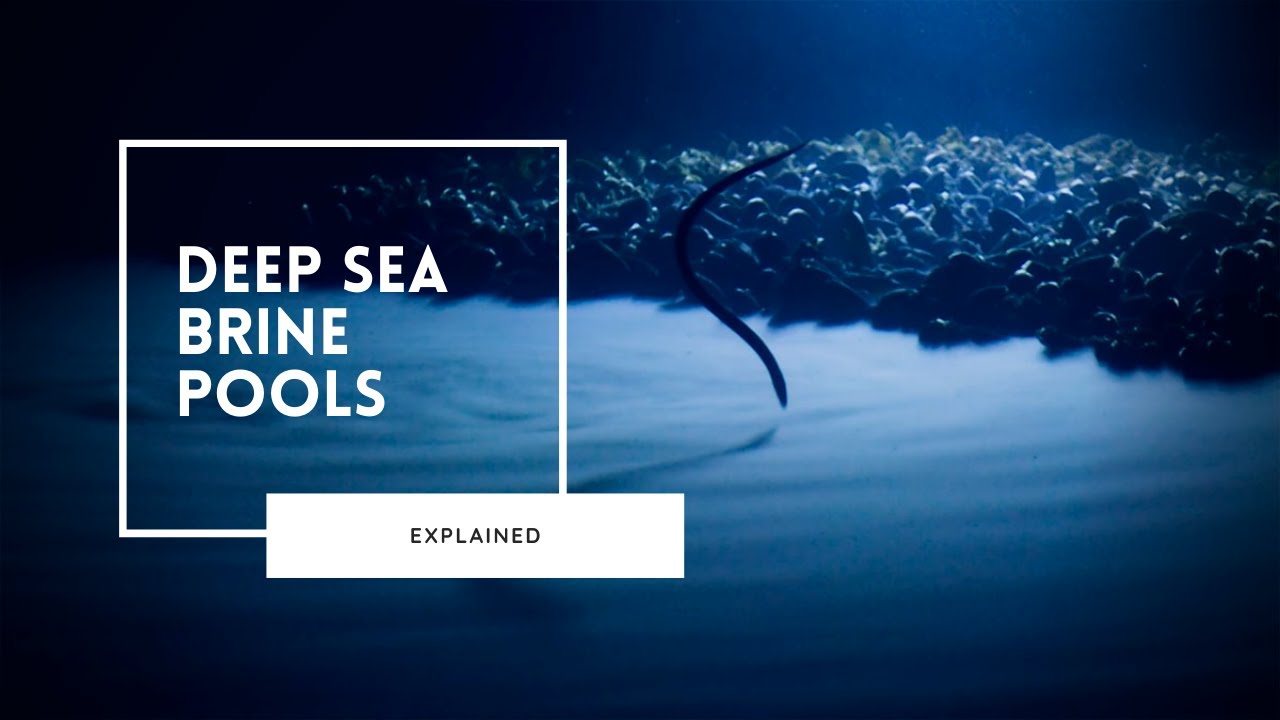
The deep ocean is a place that is full of otherworldly creatures and fascinating processes. Life here is unique, as it must be in order to survive the immense pressure, darkness, and the extreme temperatures of the deep. But resting on the ocean floor, there is a secret world that seems as if it defies the laws of physics. Here, water that can be up to five times saltier than the surrounding ocean water, seeps out of the seafloor and flows into basins to form brine pools. Mineral rich, but utterly toxic to marine life. And yet they represent islands of abundance on the sea floor. Just how does life manage it in these extreme conditions?
The Secret Life of Brine Pools

These deep sea lakes represent what appears to be, at first look, a dead zone of life, where any creatures to delve beneath the surface never return. And yet, around the perimeter of these brine pools, in stark contrast to the death traps they represent, there is an abundance of life to be found.


the unique life of BRINE POOLS
Tiny amphipods dwell atop a mineral rich, biologically diverse, seafloor. Vast colonies of mussels stretch beyond the dim horizon, supported by the high concentration of methane gas that seeps out of these pools. The mussels are only able to survive here by depending on chemosynthetic bacteria that live within their gills, together forming a symbiotic association. The bacteria convert dissolved gases — such as methane and hydrogen sulphide seeping from the ocean floor — to make the energy needed for life, and so they are able to sustain both themselves and the mussels. By living within the gills of the shellfish, they are protected from the many predators that stalk the dark seafloor.
A community of uniquely adapted organisms is able to thrive on the brine pool shore; in a similar fashion to the life that inhabits deep sea hydrothermal vent communities, we find organisms capable of chemosynthesis, as well as other organisms preying on them – all interacting and existing on the borders of a toxic pool of brine. As the energy here is largely supplied by chemosynthesis, rather than sunlight, brine pools also mirror hydrothermal vents in demonstrating how the extreme deep sea ecosystem is unique in the ways in which it supports life. There are no photosynthesising primary producers converting sunlight to energy, as the light of the sun cannot reach these depths. Instead, energy is supplied by the Earth itself.
Hagfish are frequent visitors to these briny shores, as well as crabs that risk their lives in order to feed on the bed of mussels. Sharks can be seen circling above the pools, opportunistic feeders who rely on these isolated pockets of life in the deep as a source of prey.

Gulf Hagfish
Eptatretus springeri
The Gulf hagfish is one of the only known species with the ability to enter brine pools unharmed. As the scavenging cleanup crew of the deep ocean, they carry out this function around the brine seeps where they live, living off mussels and the corpses of creatures unfortunate enough to enter the brine. .They are the only living animals that have a skull but not a vertebral column.
HOW DEEP SEA BRINE POOLS FORM
Deep sea brine pools form when water intrudes into ancient salt deposits under the seabed. The water dissolves some of their minerals and is forced out of the seafloor by warping and cracking of the salt plates, leaching up into the ocean. This highly salty water is denser than the surrounding water, so it flows into basins to form these lakes of brine that sit on the seabed. The Gulf of Mexico contains a large number of these, varying in size from 1 metre across, to up to 20km long.
But the landscape here is characterised also by a series of strange ridges, slopes and valleys, caused by salt tectonics and mineral deposition sculpting the overlying sedimentary structures. This encases the brine pools in mineral dams of their own creation.

Tube Worms
Lamellibrachia luymesi
This tube worm dwells at deep-sea cold seeps and brine pools where chemicals leaking out of the seafloor. Thus, it relies completely on symbiosis with chemosynthetic bacteria for its nutrition. The bacteria live inside the tube, where they are protected from predators.
Why brine pools are so deadly
Brine pools certainly have earned their titles of ‘pits of despair’ and ‘hot tubs of death’. There is a fine border between where life is able to thrive, and where life seems altogether absent. This is because the brine itself is toxic to most sea creatures, for these deep lakes contain almost no oxygen and are far too saline for animals to survive. When an organism enters a brine pool they attempt to "breathe" the environment, subsequently experiencing toxic shock due to the hyper-salinity. Often, any unfortunate animals to delve below the surface become pickled, as shown by how creatures have been recovered from the pools with soft tissue intact, despite having been dead for decades. Some pools also contain methane and toxic chemicals like hydrogen sulphide.
However, as we continue to see in many extreme deep sea ecosystems, life has found a way to survive even within these toxic, salty lakes. Smaller organisms have evolved the ability to convert the methane into energy, supporting a community of bacteria, shrimp, and even tube worms. However, that’s about as long as the list gets. The concentrated brine remains a deadly place for most creatures.
In many deep ocean ecosystems, from whale fall communities to scolding hydrothermal vents and toxic brine pools, there is a pattern of life thriving in very close proximities to death. Whether organisms are deriving nutrients from sunken corpses that give life to the barren deep for decades, or somehow finding a way to exist in the fine gradient between an energy-giving deathtrap, and the lifeless sea floor, creatures of the deep sea are specialised, unique and evoke a fascination for the peculiar wonders of the abyss.
More topics


Life at Cold Seeps
Cold seeps are areas of the ocean floor where hydrogen sulphide, methane, and other hydrocarbon-rich seepage occurs. Through a number of process, the chemicals support a biome of highly specialised creatures that live around these cold seeps.

The Open Ocean
The open ocean is an entirely different world to the benthic zone of the sea floor. The endless blue stretches away in all directions, while the black abyss hangs gaping below. Currents are stronger here. There is no shelter to be found, and food is hard to come by.

The Deep Sea Floor
Deep sea life must choose whether to live on the bottom at the benthic zone, or to brave the expansive open ocean of the pelagic midwater zone. These two groups of organisms could not be more different, but which is a more effective way of life?

Cold-Water Reefs
Deep Sea Coral Reefs represent areas of astounding biodiversity. Lush cold water coral and sponge gardens thrive in the icy waters. An expanse of colourful coral structures blooming out of the sea floor, providing important habitats for deep-dwelling life.

Deep Sea Food Web
The exact nature of the deep sea food web is still not fully understood, but advancements in technology and research in recent years have granted us a greater understanding of how these separate settlements of life are interconnected as one. Let’s take a closer look at the food web of the deep sea.


Plastic in the Ocean
The main threats seen in our oceans are species loss, habitat degradation, and changes in ecosystem function. Human activities causing a rise in extinction rates has lead to a decrease in biodiversity, particularly in coral reefs, 88% of which are threatened by excessive CO2 emissions.